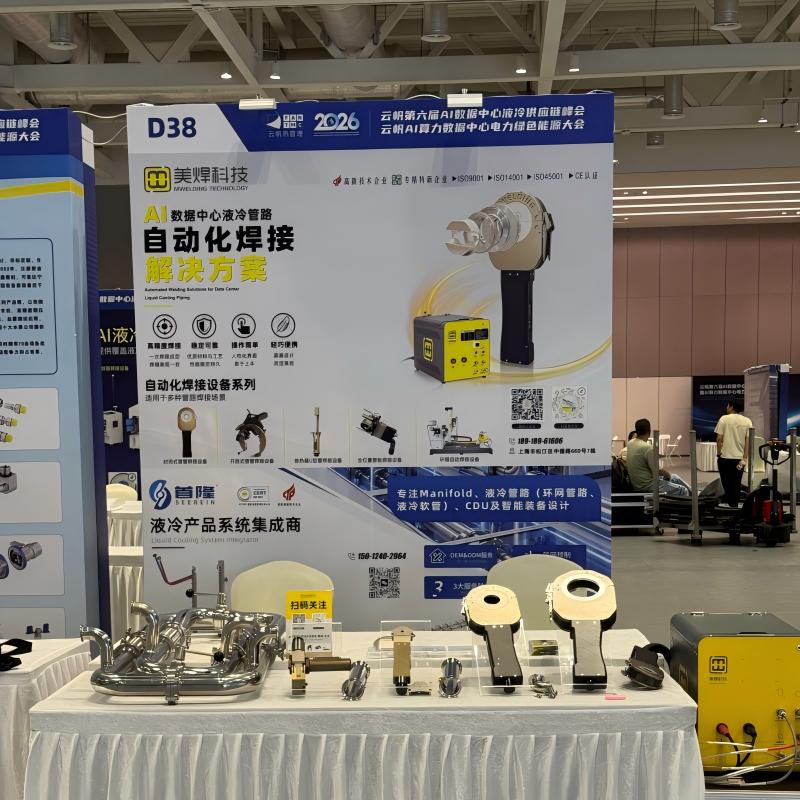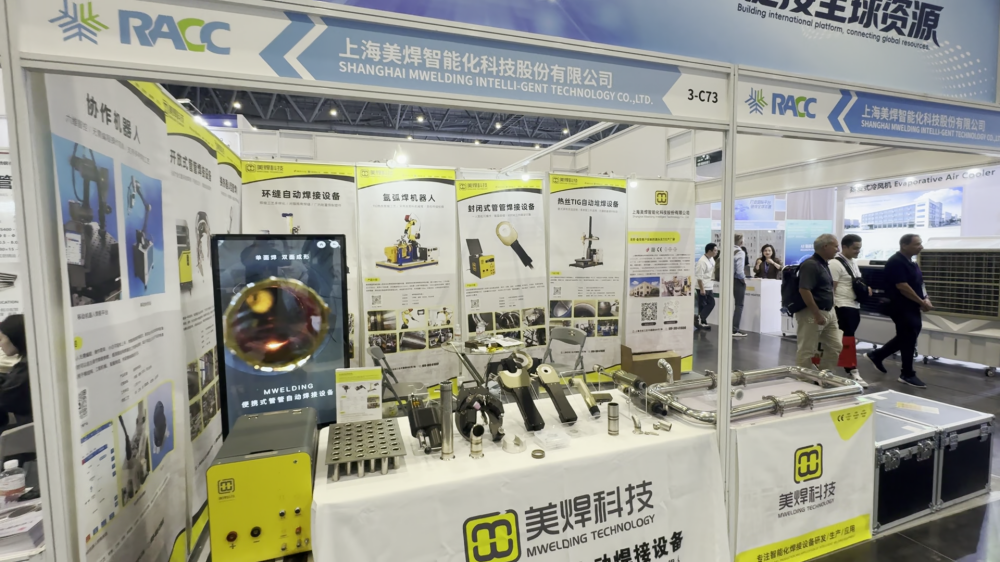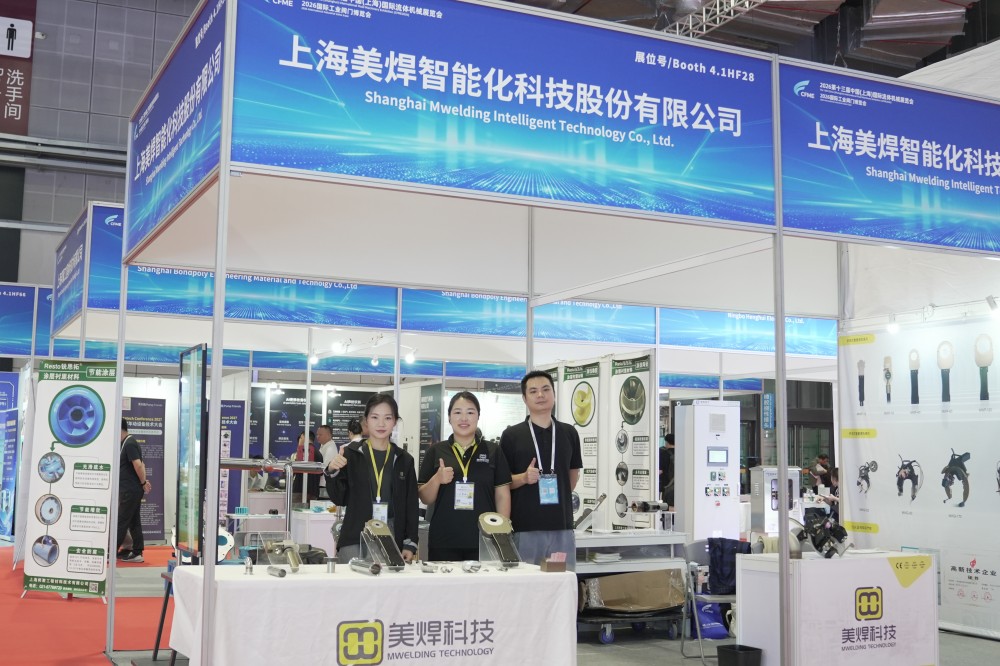
From shop prefabrication to field fixed pipe welding, focusing on medium & large diameter, thick-wall, multi-layer & multi-pass welding and Level 1 NDT requirements!
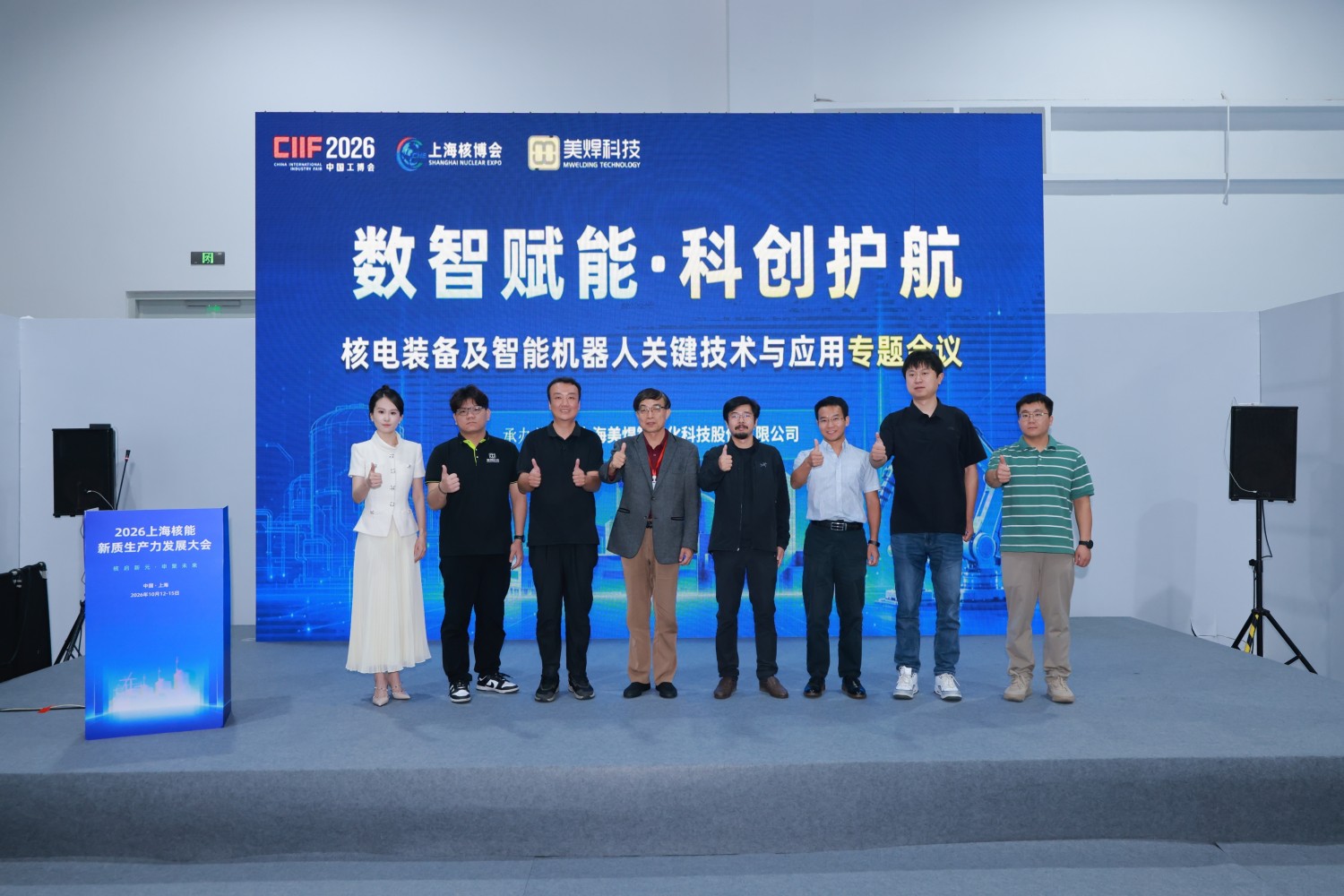
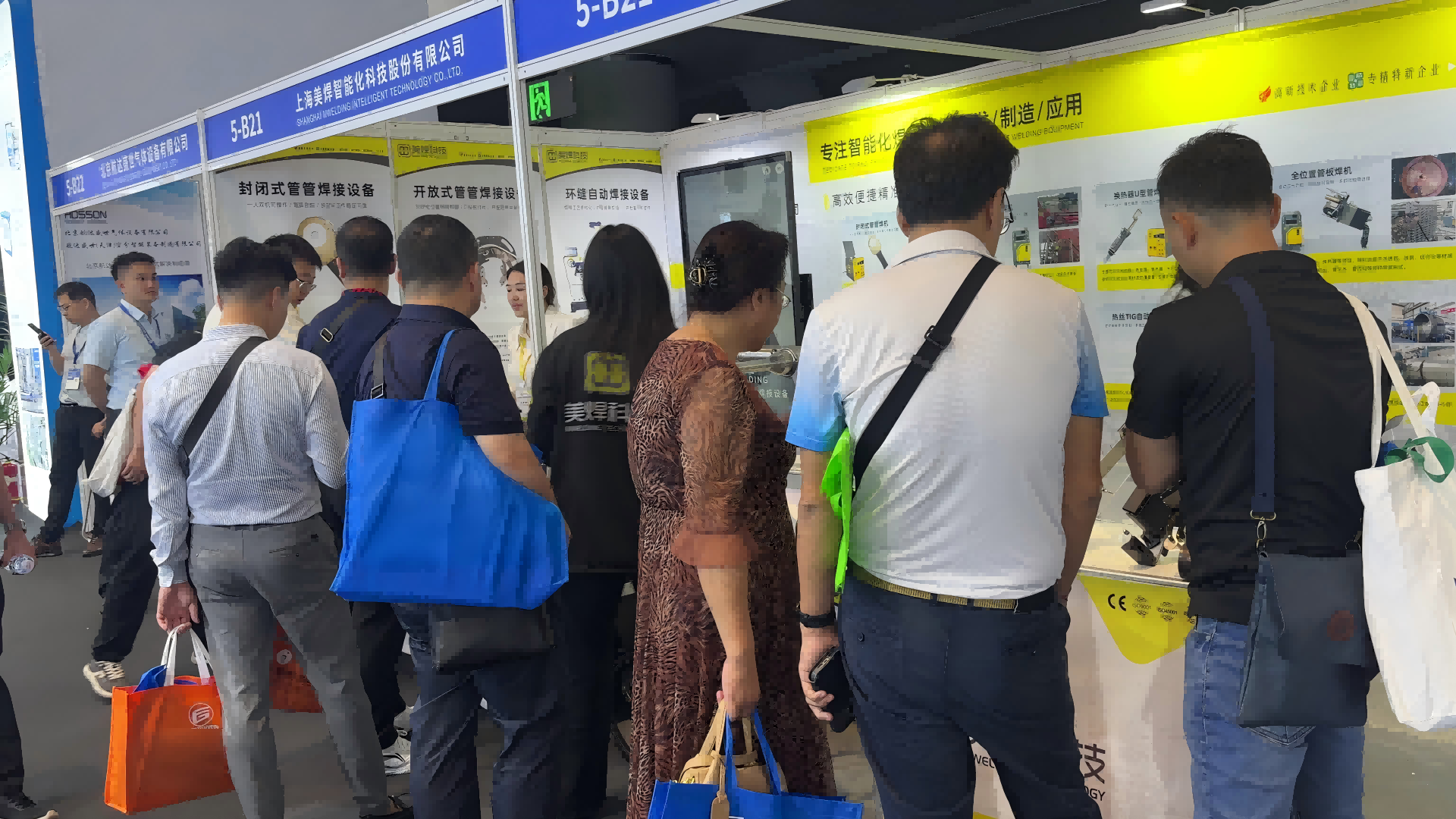
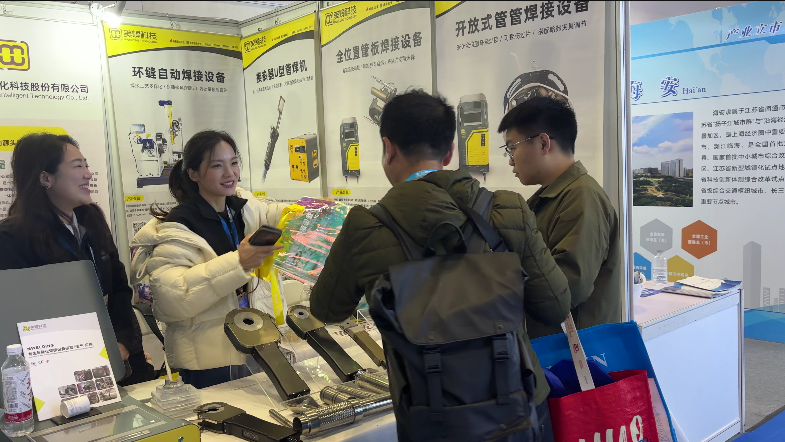
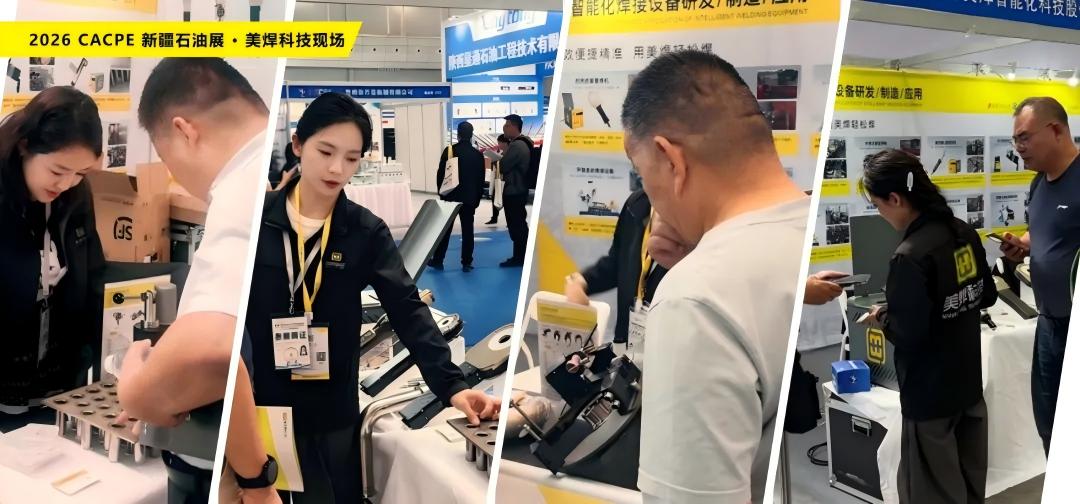
Xinjiang Petroleum & Chemical Industry Expo (CACPE) was held at Xinjiang International Convention & Exhibition Center from September 3 to 5, 2026. Shanghai Mwelding Intelligent Technology Co., Ltd. (Mwelding) showcased a full range of orbital pipe automatic welding machines at Booth E1-33-1, Hall 5. Centered on industrial piping scenarios including petrochemical, natural gas, coal chemical and energy engineering, we demonstrated automated pipe welding solutions covering shop prefabrication and on-site installation.
At this exhibition, Mwelding highlighted the MWG Open Orbital Tube-to-Tube Welding Machine, MWHF Circumferential Seam Automatic Welding Equipment and Orbital Welding Carriage. They are engineered for typical working conditions: all-position welding for fixed pipes, large-diameter fittings and circumferential seams, and super-large diameter fixed pipelines respectively. The MWG Open Orbital Tube-to-Tube Welding Machine supports a maximum pipe diameter of Φ325 mm, while the MWHF Circumferential Seam Automatic Welding Equipment reaches Φ800 mm. Custom orbital welding solutions are available for even larger pipes according to actual site conditions. For projects with strict quality acceptance requirements, welds made by Mwelding automatic welding machines can meet Level 1 NDT acceptance standards when the welding procedure, pipe fitting conditions, construction and inspection requirements are satisfied. Final results shall be subject to procedure qualification tests based on customers’ actual fittings and project specifications.
I. Petrochemical Pipe Welding: Challenges Go Beyond Large Diameters
The technical complexity of petrochemical pipe welding comes from combined factors: pipe diameter, wall thickness, material, groove, fit-up condition, welding position and acceptance criteria. For automatic welding machines, the core task is not simply making the torch travel around the pipe, but executing qualified and validated welding procedures stably across different positions and weld layers.
1. Stable Multi-layer & Multi-pass Welding for Thick-wall Pipes
As wall thickness increases, welds require root, fill and cap passes following groove design. Welding current, travel speed, wire feed rate, oscillation and heat input must be calibrated for each layer and pass. Automation converts manual-dependent operations into programmable, repeatable procedures, reducing quality variations between joints, shifts and operators.
2. Zoned Parameter Control for All-position Fixed Pipe Welding
A large number of on-site petrochemical pipes cannot be rotated after installation. The welding head must complete 360° orbital welding around fixed pipes, covering flat, vertical and overhead positions. Molten pool behavior changes with orientation, so welding current, travel speed, wire feed speed, oscillation width and dwell time on both sides must be adjusted by welding position. For medium & large diameter thick-wall pipes, this works together with multi-layer & multi-pass programs.
3. Consistent Repeatability Is the Core of Quality Control
Petrochemical projects impose strict internal weld quality and non-destructive testing requirements. Defects such as porosity, inclusion, lack of fusion and incomplete penetration lead to rework. When selecting equipment, do not only evaluate automation level. It is critical to verify whether the machine can repeatedly produce compliant welds under proper groove, fit-up and welding procedures. [Image: Exhibition Site]
II. Three Types of Equipment for Typical Petrochemical Orbital Welding Scenarios
Pipe diameter is an important selection factor, yet not the only one. Before choosing petrochemical automatic welding machines, you also need to check whether workpieces are rotatable, whether welding is performed in shop or on site, whether wire feeding and oscillation are required, multi-layer & multi-pass needs, and available workspace.
表格
| Equipment Series | Typical Application | Welding Range & Adaptation | Core Capabilities |
|---|---|---|---|
| MWG Open Orbital Tube-to-Tube Welding Machine | On-site fixed pipe, all-position pipe welding | Max. diameter Φ325 mm | Wire feeding, oscillation, multi-layer & multi-pass, all-position automatic welding |
| MWHF Circumferential Seam Automatic Welding Equipment | Shop prefabrication, large-diameter fittings, flanges and circumferential welds | Max. diameter Φ800 mm | Synchronized motion and parameter control, suitable for thick-wall multi-layer & multi-pass welding |
| Orbital Welding Carriage | Super-large diameter fixed pipes, on-site circumferential seams for large components | Custom rails per workpiece OD | No restriction from fixed clamping fixtures, adaptable for extra-large workpieces |
MWG Open Orbital Tube-to-Tube Welding Machine: Max. Φ325 mmDesigned for installed, non-rotatable pipes, the Mwelding MWG Open Orbital Tube-to-Tube Welding Machine operates with the welding head orbiting around fixed pipes, up to Φ325 mm. It supports wire feeding, oscillation and multi-layer & multi-pass welding for petrochemical process pipelines, natural gas pipelines, coal chemical pipelines, energy engineering pipelines and on-site all-position fixed pipe welding. For projects with mixed pipe sizes, equipment coverage shall be confirmed based on actual diameter range, wall thickness, clamping method and welding procedure, instead of judging by a single pipe size. [Image: Mwelding MWG Open Orbital Tube-to-Tube Welding Machine Series]
MWHF Circumferential Seam Automatic Welding Equipment: Max. Φ800 mmIdeal for large-diameter fittings, flanges and circumferential welds better completed in workshops, the Mwelding MWHF Circumferential Seam Automatic Welding Equipment reaches a maximum diameter of Φ800 mm. It coordinates mechanical movement and welding parameters to stabilize torch trajectory, travel speed, wire feeding and oscillation, well suited for continuous welding and multi-layer & multi-pass procedures on large thick-wall workpieces. [Image: Mwelding MWHF Circumferential Seam Automatic Welding Equipment Series]
Orbital Welding Carriage: For fixed pipes above Φ800 mm and larger sizesWhen pipe diameters exceed the range of standard circumferential seam equipment or large workpieces cannot rotate, an orbital welding carriage is the solution. Custom rails are fitted to the outer diameter of the target workpiece, and the carriage travels along the rail to complete circumferential welding, free from limits of fixed chucks or standard welding heads. Custom rail schemes are available for super-large pipes such as Φ1000 mm and above, based on diameter, site structure and construction space. [Image: Mwelding Orbital Welding Carriage]
III. Core Value of Orbital Pipe Welding: Turn Weld Consistency Into Controlled Process Outcomes
The main advantage of orbital pipe welding is not merely reducing manual torch handling. More importantly, it converts key welding variables into programmable, executable and repeatable procedures. After procedure qualification or test weld validation, welding current, travel speed, wire feed speed, oscillation width, dwell time and multi-layer & multi-pass sequences can be calibrated and repeated for different positions and weld layers. For petrochemical projects, such repeatability minimizes manual variations, improves consistency across weld joints, lowers rework risks, and enhances controllability of construction schedules and quality management.
IV. Can Welds Made by Mwelding Orbital Welding Machines Meet Level 1 NDT Requirements?
Yes. Welds can meet Level 1 NDT acceptance standards when the welding procedure, pipe fitting conditions, construction and inspection requirements match project specifications. Final verification depends on the non-destructive testing method, acceptance grade and applicable standards adopted by the project. It should be clarified that “Level 1 NDT” refers to the final weld quality result under corresponding NDT and acceptance standards, which cannot be determined by the welding machine alone. Actual outcomes are also affected by base material, pipe diameter & wall thickness, groove precision, root gap, misalignment, filler metal, shielding gas, welding parameters, site environment, testing methods and acceptance criteria. For projects requiring Level 1 NDT, Mwelding will first confirm your pipe specifications and acceptance requirements before equipment selection and procedure matching. Test welds with actual or similar pipe samples will be arranged if necessary, with NDT results to validate the welding procedure. [Image: Weld sample from MWG Open Orbital Tube-to-Tube Welding Machine, third-party customer NDT report]
V. Why Is Test Welding Recommended Before Orbital Pipe Welding Machine Selection?
Pipes with identical outer diameter may require completely different welding procedures due to variations in material, wall thickness, groove, fit-up and quality requirements. “Machine capable of welding” does not equal “machine stably satisfying project acceptance standards”. Mwelding supports test weld validation with customer-provided actual or similar pipe samples. The purpose of test welding is not only to demonstrate machine operation, but to verify compatibility among equipment, welding head, groove design, layer-pass layout and process parameters with real working conditions. Test welds help confirm machine model, torch configuration, groove requirements, weld layers, wire feeding & oscillation modes and key parameters. Weld appearance and project inspection criteria will be evaluated to judge solution suitability. For projects with mandatory NDT requirements, special materials, custom grooves or thick-wall multi-layer & multi-pass welding, it is safer to complete procedure validation before finalizing equipment selection.
VI. 7 Key Information to Confirm Before Purchasing Petrochemical Orbital Welding Machines
- Pipe diameter range: minimum OD, maximum OD and frequently used sizes
- Wall thickness range: especially for thick-wall pipes, confirm groove and multi-layer & multi-pass requirements
- Pipe material: carbon steel, stainless steel, alloy steel, etc. (subject to machine model and procedure compatibility)
- Pipe structure: butt welds, pipe-flange joints, large fittings or other circumferential seam structures
- Groove and fit-up conditions: groove type, angle, root face, gap and misalignment
- Construction mode: shop prefabrication or field installation; whether workpieces can be rotated
- Inspection and acceptance requirements: NDT method, quality grade and applicable project standards
If Level 1 NDT is required, specify this during inquiry and selection, and carry out targeted procedure validation with actual pipe samples.
VII. Frequently Asked Questions on Petrochemical Orbital Pipe Welding
Q1: Can Mwelding orbital welding machines achieve Level 1 NDT? A1: Yes. Welds can meet Level 1 NDT acceptance standards when the welding procedure, pipe fitting conditions, construction and inspection requirements match project specifications. Final results are subject to procedure validation against project NDT methods, acceptance grades and standards.
Q2: What is the maximum diameter for the open orbital tube-to-tube welding machine? A2: Mwelding MWG Open Orbital Tube-to-Tube Welding Machine supports up to Φ325 mm, mainly for all-position fixed pipe welding and on-site installation of medium & large diameter pipelines.
Q3: What is the maximum diameter for large-diameter pipe welding? A3: Mwelding MWHF Circumferential Seam Automatic Welding Equipment reaches Φ800 mm. Custom orbital welding carriage solutions are available for super-large fixed pipes beyond this range.
Q4: Can thick-wall pipes be welded automatically? A4: Yes. Thick-wall pipes normally require grooved wire-fed multi-layer & multi-pass welding. The exact layer-pass layout and parameters are determined by material, wall thickness, groove form, welding position and quality requirements.
Q5: Do I need different automatic welding machines for different pipe diameters? A5: Not necessarily. Multiple sizes can be covered within the applicable range of each series via clamping/rail adaptation and parameter adjustment. Final selection depends on your actual pipe size mix, wall thickness and construction conditions.
VIII. Mwelding: Automatic Welding Machines & Process Solutions for Industrial Piping
Shanghai Mwelding Intelligent Technology Co., Ltd. (Mwelding) is a professional manufacturer of orbital pipe automatic welding machines, focusing on automated precision pipe welding technology and equipment. Our product portfolio covers closed chamber tube-to-tube orbital welding, open orbital tube-to-tube welding, circumferential seam welding, orbital welding carriage, tube sheet orbital welding, hot wire TIG cladding and custom automatic welding systems for tube-to-tube, tube-to-tubesheet, circumferential seam and special workpiece applications. Our machines are widely used in petrochemical, natural gas, energy engineering, pressure vessel, heat exchanger, clean piping and other industrial piping & equipment manufacturing sectors. For individual projects, Mwelding provides equipment selection and procedure matching based on pipe diameter, wall thickness, material, pipe structure, welding position, construction conditions and acceptance criteria. Test weld validation with real pipe samples is available.
The 2026 Xinjiang Petroleum & Chemical Industry Expo has concluded. The most frequent questions raised on-site are exactly what petrochemical buyers care about most: What is the maximum weldable diameter? Can thick-wall pipes be welded with multi-layer & multi-pass procedures? Can on-site fixed pipes realize all-position automatic welding? Can welds pass Level 1 NDT?
If you are looking for solutions for large-diameter thick-wall orbital welding, fixed pipe all-position welding, pipe & flange circumferential welding, or selecting petrochemical orbital welding machines, send us your pipe parameters and project acceptance requirements for process evaluation. Pipe samples (actual or similar specs) can be submitted for welding verification for projects needing performance confirmation.